
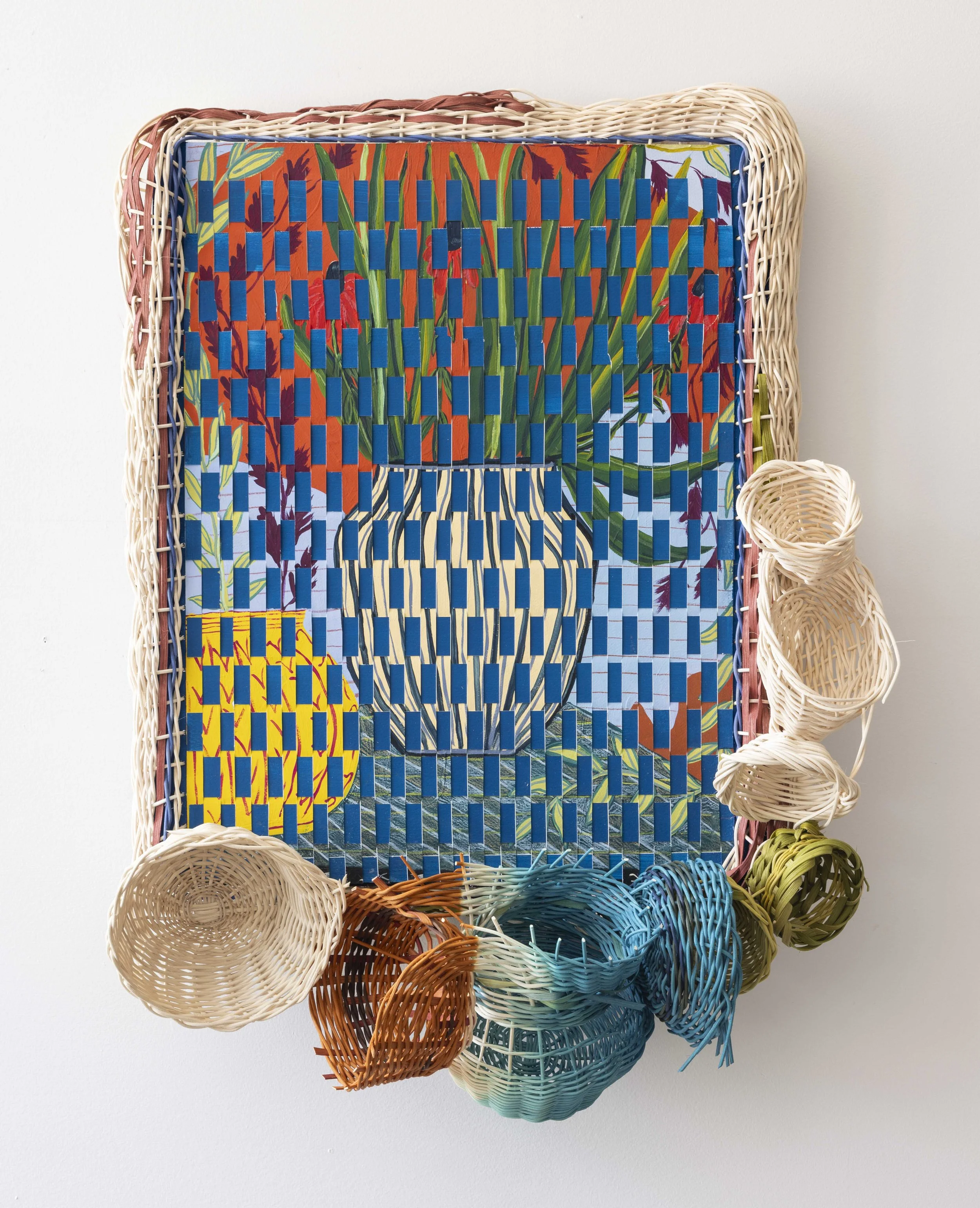
 Image 1 of 5
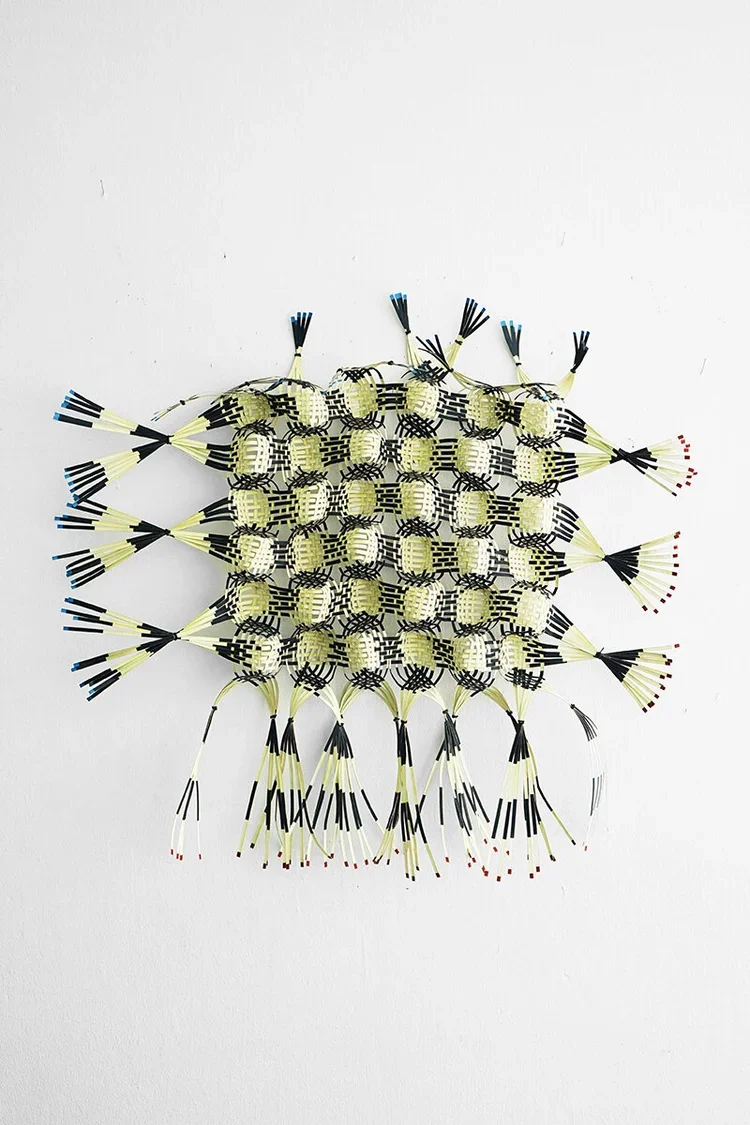 Image 2 of 5
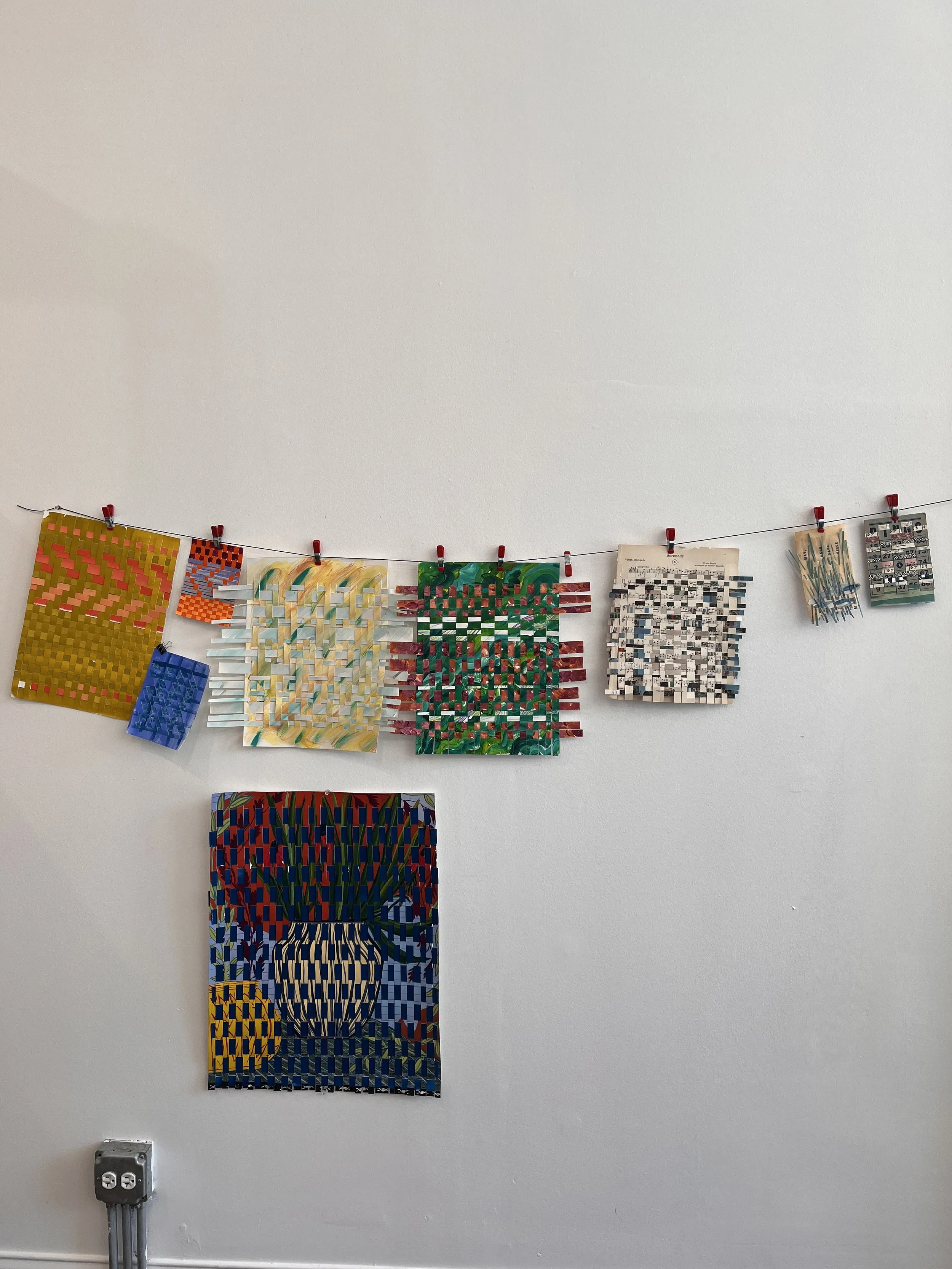 Image 3 of 5
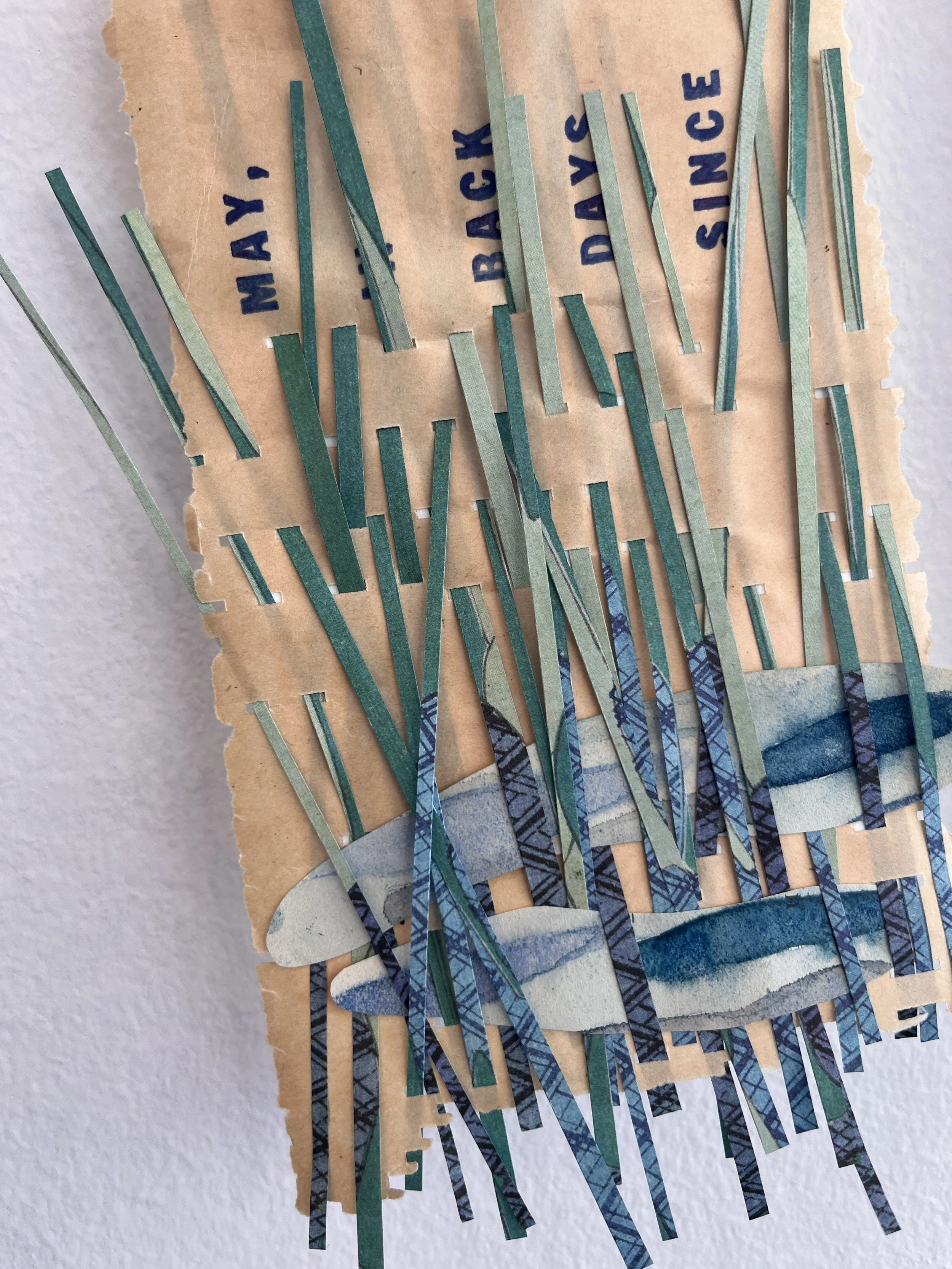 Image 4 of 5
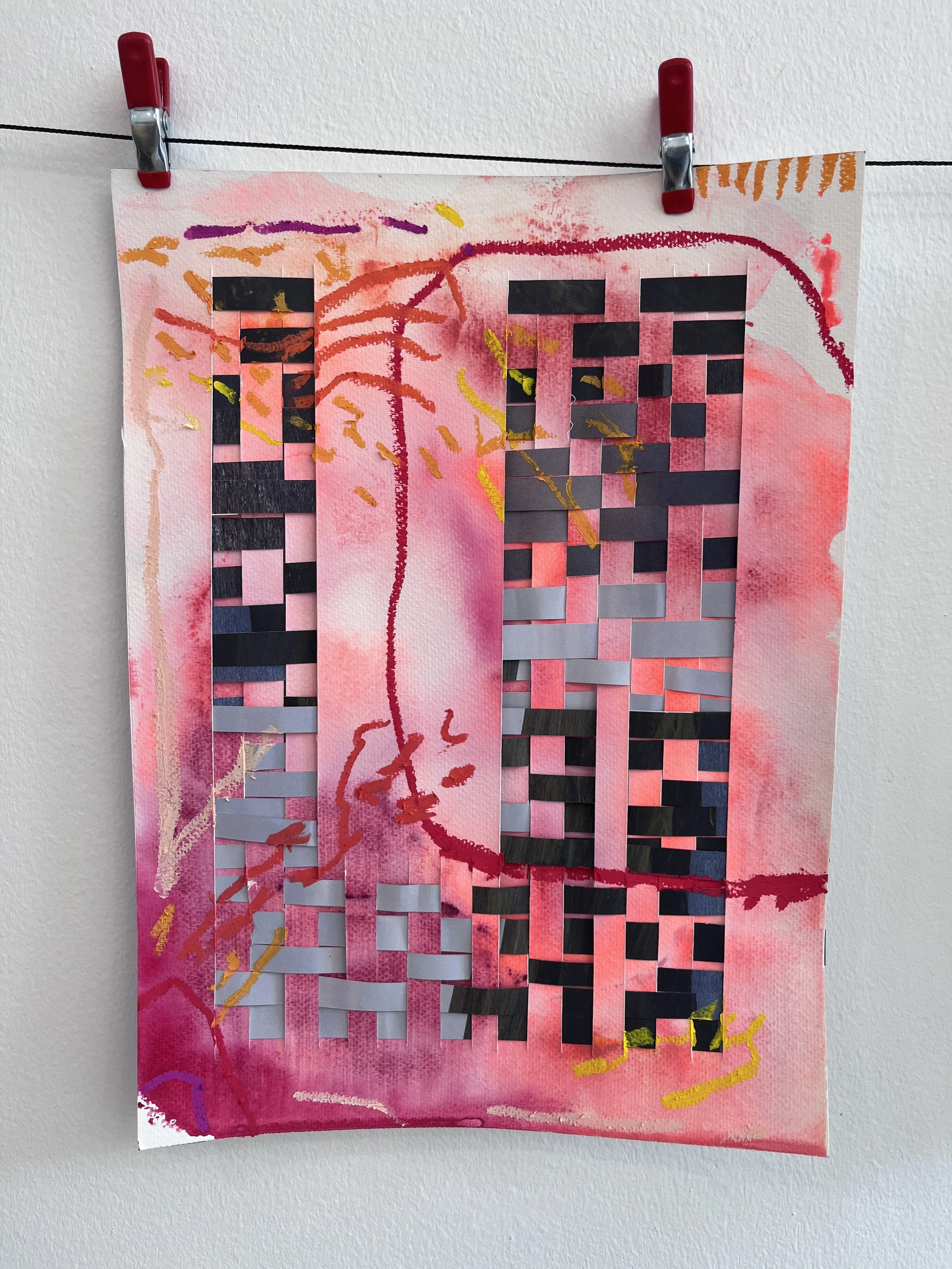 Image 5 of 5
Instructor: Dee Clements
Format: In-person, 3 hours
Date(s): October 10, 2026
Day/Time: Saturday, 11 am to 2 pm
In this hands-on workshop, participants will explore weaving as a painting process by transforming painted paper into a woven surface. Using acrylic paint, students will first create expressive painted sheets that function as both a color palette and a raw material. Once dry, these painted papers will be cut into strips and woven together to create a flat paper “painting,” where color, pattern, and composition emerge through interlacement.
This workshop introduces weaving as both a structural technique and a conceptual tool for image-making. Participants will experiment with color relationships, repetition, and rhythm while learning plain weave and twill weaving structures. The resulting works sit between painting, collage, and textile.
We’ll look at contemporary artists such as Miguel Arzabe, whose vibrant woven painting works explore fragmentation and cultural memory, and Dienke Dekker, and other artists, all of whom investigate textile structures using unconventional materials such as paper and tape. By weaving painted paper, participants will experience how image and structure interact to create new visual possibilities.
No previous experience is required. This workshop is open to beginners as well as to artists interested in experimenting with materials and processes.
Learning Outcomes
By the end of the workshop, participants will be able to:
Understand basic weaving structure
Transform painted surfaces into woven compositions
Explore color interaction, rhythm, and pattern through weaving
Develop an awareness of weaving as both image and structure
Gain familiarity with contemporary artists who integrate weaving into visual art practices
Produce a finished woven paper artwork
Provided materials include:
Watercolor paper
Acrylic paints
Scissors
Tape for securing edges
Participants should bring
Ruler
paint brushes
Optional: Participants may bring additional papers if desired, such as decorative paper, printed paper, a photo, or magazines
Optional: cutting mat if you are using an X-Acto knife
Optional: x-acto knife
Any water-based paints you want to work with that are not in the provided list. We recommend gouache, watercolor, or acrylic paints.
Please review our cancellation policies on the FAQ page.
ARTWORK IMAGE CREDITS:
Bottom: 1. Dee Clements 2. Class work, 3. Robin Russo 4. Camilla Suescun Lecompte, 5. Dienke Dekker, Intersect: paper, gouache, acrylic, acrylic marker, ball pen
Instructor: Dee Clements
Format: In-person, 3 hours
Date(s): October 10, 2026
Day/Time: Saturday, 11 am to 2 pm
In this hands-on workshop, participants will explore weaving as a painting process by transforming painted paper into a woven surface. Using acrylic paint, students will first create expressive painted sheets that function as both a color palette and a raw material. Once dry, these painted papers will be cut into strips and woven together to create a flat paper “painting,” where color, pattern, and composition emerge through interlacement.
This workshop introduces weaving as both a structural technique and a conceptual tool for image-making. Participants will experiment with color relationships, repetition, and rhythm while learning plain weave and twill weaving structures. The resulting works sit between painting, collage, and textile.
We’ll look at contemporary artists such as Miguel Arzabe, whose vibrant woven painting works explore fragmentation and cultural memory, and Dienke Dekker, and other artists, all of whom investigate textile structures using unconventional materials such as paper and tape. By weaving painted paper, participants will experience how image and structure interact to create new visual possibilities.
No previous experience is required. This workshop is open to beginners as well as to artists interested in experimenting with materials and processes.
Learning Outcomes
By the end of the workshop, participants will be able to:
Understand basic weaving structure
Transform painted surfaces into woven compositions
Explore color interaction, rhythm, and pattern through weaving
Develop an awareness of weaving as both image and structure
Gain familiarity with contemporary artists who integrate weaving into visual art practices
Produce a finished woven paper artwork
Provided materials include:
Watercolor paper
Acrylic paints
Scissors
Tape for securing edges
Participants should bring
Ruler
paint brushes
Optional: Participants may bring additional papers if desired, such as decorative paper, printed paper, a photo, or magazines
Optional: cutting mat if you are using an X-Acto knife
Optional: x-acto knife
Any water-based paints you want to work with that are not in the provided list. We recommend gouache, watercolor, or acrylic paints.
Please review our cancellation policies on the FAQ page.
ARTWORK IMAGE CREDITS:
Bottom: 1. Dee Clements 2. Class work, 3. Robin Russo 4. Camilla Suescun Lecompte, 5. Dienke Dekker, Intersect: paper, gouache, acrylic, acrylic marker, ball pen